


About Ladakh
There are a few things you should know about the region before you embark to your holidays to Ladakh. Please take some time to go through this text. We hope that the following info is useful for you, and that it helps you with the preparations for your Ladakh journey.
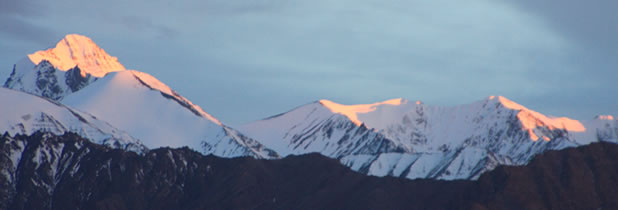 Stok Khangri (6,123 m) is the highest peak around Leh.
Short introduction
Ladakh, «the land of high passes», is a high-altitude region on an average altitude of more than 3,500 m. It is one of the most sparsely populated regions in the Indian State of Jammu and Kashmir, and its culture and history are closely related to that of Tibet.
Ladakh has a population of about 260,000 which is a blend of many different ethnic groups, predominantly Tibetans, Monpas and Dards. Most Ladakhis in Leh District and Zangskar are Tibetan Buddhist, while most of the rest of Kargil District are Shia Muslims. There are about forty families of Ladakhi Christians, who converted in the 19th century. Among non-Ladakhi residents, there are followers of Hinduism and Sikhism, and a small number of followers of the Bon religion.
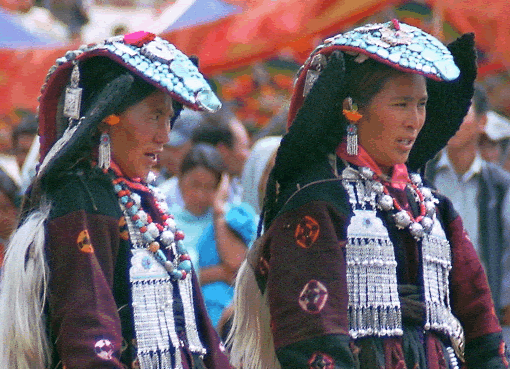 Women in their traditional attire during a festival.
 Monk reading a Buddhist text.
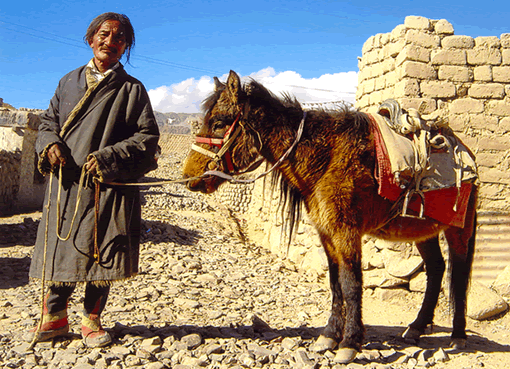 A nomad from Changtang with his horse.
 A farmer's woman with her child.
The principal language is Ladakhi, which is a Tibetan language. Educated Ladakhis usually know Hindi, Urdu, and often English. Within Ladakh, there is a range of dialects, but they are all mutually comprehensible. Administrative work and education are carried out in English, although Urdu was used to a great extent in the past. Now, only few records are kept in Urdu.
In the past, Ladakh gained importance from its strategic location at the crossroads of important trade routes, but since the Chinese authorities closed the borders with Tibet and Central Asia in the 1960-ies, international trade has dwindled except for tourism. The region has been opened to tourists from 1974. Since Ladakh is a part of strategically important Jammu and Kashmir, the Indian military maintains a strong presence in the region.
Due to its altitude, the temperatures in Ladakh are extreme. During the summer months, the weather and temperatures are pleasant during the day, having cool nights and mornings. The temperatures can easily get to -15 degrees celsius during winter. Harsh winters have seen mercury dropping until -30 degrees celsius.
Tourists visiting Ladakh in summer should consider to bring a good sun protection (hat, shades, sun cream), casual as well as warm clothing. Trekking enthusiasts should not forget to bring good shoes and a comfortable backpack. People embarking in an expedition can lease good mountaineering gear with us. Travelers visiting the region during winter need to bring VERY WARM CLOTHING.
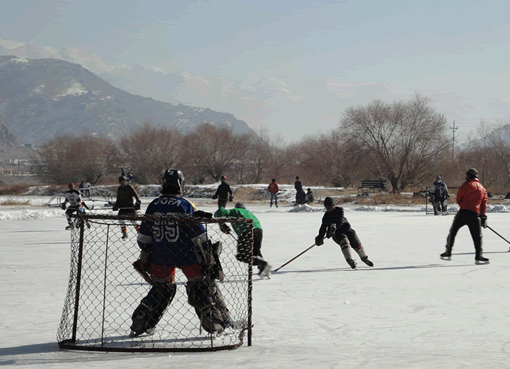 Ice hockey is a popular sport during winter.
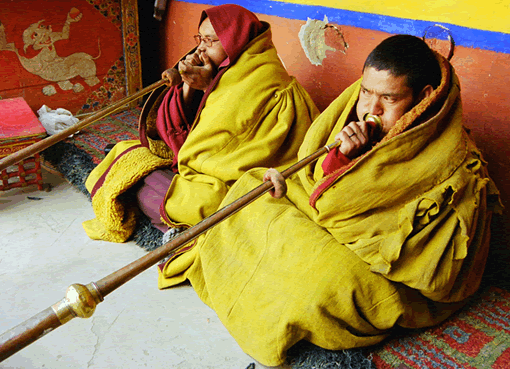 Many mask dances also take place during the winter months.
The majority of roads in Ladakh are looked after by the Border Roads Organisation. If you want to reach Ladakh by road, please inform yourself about the opening of the roads leading into/coming from Leh. The roads Manali-Leh and Srinagar-Leh are leading over high passes, some of them higher than 5,000 m, and are open usually from May till November. However, this can vary from year to year as the weather is unpredictable. Local buses from Leh to villages run throughout the year. Ladakh can be reached throughout the year by flight. The airport is in Leh.
The economy of Ladakh rests on three pillars: the Indian Army, tourism, and civilian government in the form of jobs. For centuries, Ladakh enjoyed a stable and self-reliant agricultural economy based on growing barley, wheat and vegetables, and keeping livestock, especially yaks, cows, dzos (a cross-breeding of yak and cow), sheep and goats. Agriculture, the mainstay of only one generation ago, is no longer a majo portion of the economy, although most families still own and work their land.
 Ladakhi woman watering the field.
 Agriculture is still an important part of the economy.
Fauna and flora of Ladakh
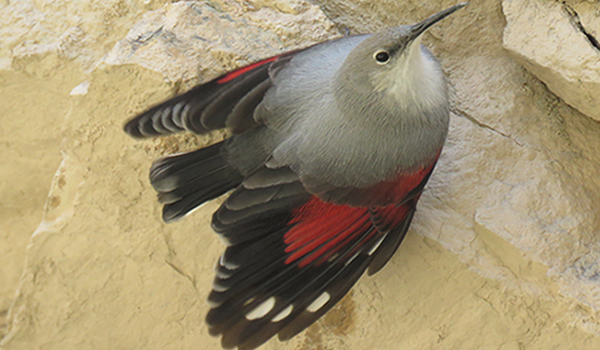
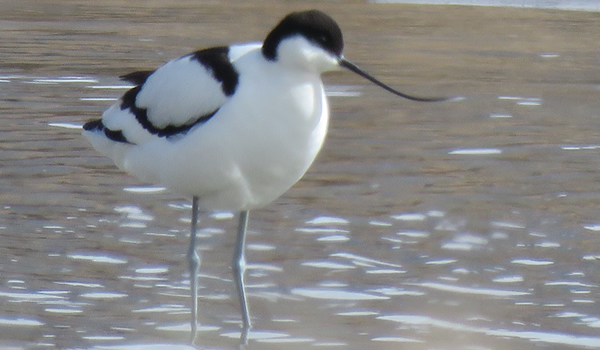
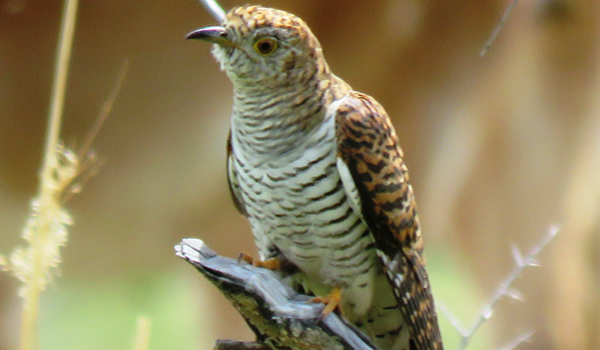
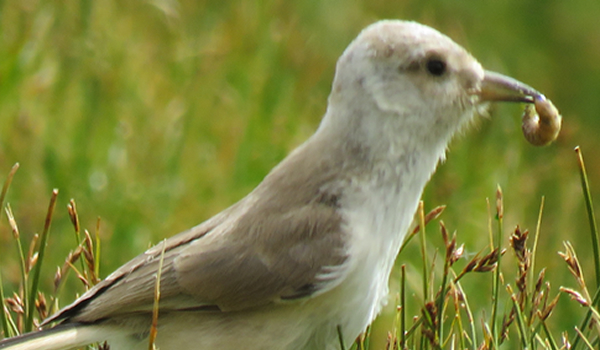
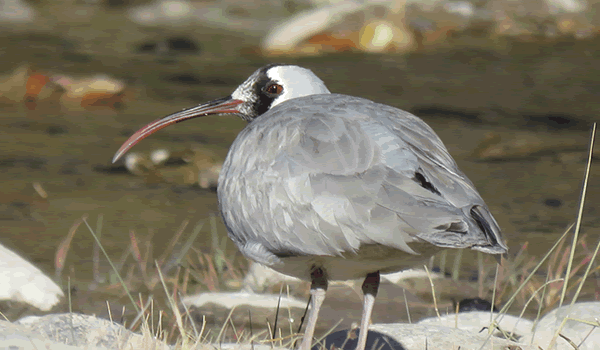
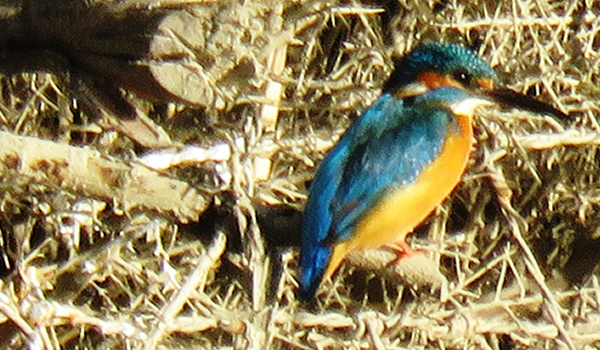
The fauna of Ladakh has much in common with that of Central Asia in general and that of the Tibetan Plateau in particular. Exceptions to this are the birds, many of which migrate from the warmer parts of India to spend the summer in Ladakh. For such an arid area, Ladakh has a great diversity of birds — more than 300 species have been recorded.
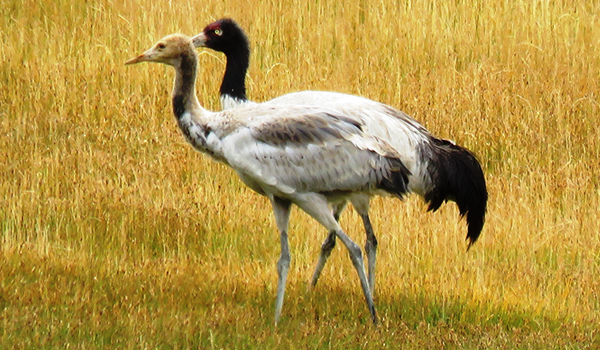
Many species of finches, robins, redstarts, and the hopooe are common in summer. Resident water-birds include the brahminy duck also known as the ruddy sheldrake and the bar-headed goose. The black-necked crane, a rare species found scattered in the Tibetan plateau, is also found in parts of Ladakh. Other birds include the raven, Eurasian magpie, red- and yellow-billed chough, Tibetan snowcock, and chukar. The lammergeier and the golden eagle are common raptors here.
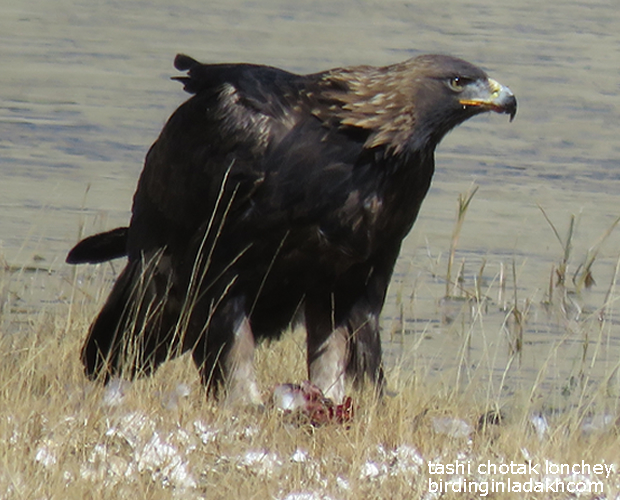 Golden eagle
The bharal or blue sheep is the most abundant mountain ungulate in the Ladakh region. The Asiatic ibex, the Ladakhi Urial, the Tibetan argali or Nyan, the endangered Tibetan antelope, or the Tibetan gazelle are some of the unique mammals found in Ladakh. Some of these are endangered species. The kiang, or Tibetan wild ass, is common in the grasslands of Changthang, the eastern part of Ladakh.There are about 200 snow leopards in Ladakh, most of them found in the Hemis High Altitude National Park. The Eurasian lynx, and the Pallas's cat are rare in Ladakh. The Tibetan wolf, brown bears, the Tibetan sand fox, marmots, hares, and several types of pika and vole as well as other mammals can be spotted in Ladakh, too.
 Blue sheeps (Bharal)
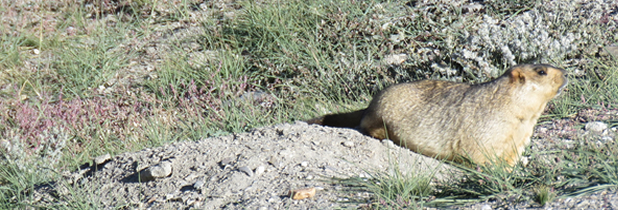 Marmot
Scant precipitation makes Ladakh a high-altitude desert with extremely scarce vegetation over most of its area. Natural vegetation mainly occurs along water courses and on high altitude areas that receive more snow and cooler summer temperatures. Human settlements, however, are richly vegetated due to irrigation.
Natural vegetation commonly seen along water courses includes seabuckthorn (Hippophae spp.), wild roses of pink or yellow varieties, tamarisk, stinging nettles, mint, and various grasses. Natural vegetation in unirrigated desert around Leh includes capers (Capparis spinosa), Nepeta floccosa, globe thistle (Echinops cornigerus), Ephedra gerardiana, rhubarb, Tanacetum spp., several artemisias, Peganum harmala, and several other succulents. Juniper trees grow wild in some locations and are usually considered sacred by Buddhists.
Human settlements are marked by lush fields and trees, all irrigated with water from glacial streams, springs, and rivers.
 Explore the amazing flora and fauna of Ladakh!
The environment
Ladakh has a fragile eco-system which sustains, besides the sparse population, some rare fauna and flora which are especially adapted to this specific environment. It deserves your special care and consideration so that this fragile eco-system is not disturbed to the disadvantage of its unique flora, and fauna.
In this regard, kindly follow these steps:
- Do not permit your car drivers to drive off any main/secondary roads in wildlife areas, particularly on the Changthang plateau.
- Do not throw any rubbish including clothes, metals pieces, paper, and plastics in any safari/trekking area, nor permit your safari/trekking staff to do so.
- Do not throw any waste in animal holes (e.g. marmot) nor in any waterways, nor permit your safari/trekking staff to do so.
- Do not camp along lake sides and marshlands as the tourist season coincides with the breeding season of migratory birds.
- Neither approach, nor photograph nesting birds from a close distance. For photographic purposes, only long-focal length lenses should be used, and your camera flash must be turned off.
